Pregnancy · Nutrition
7 min readEating Well in the Second Trimester: Simple Nutrition That Works
The second trimester, generally weeks 14 through 27, can bring changes in appetite, energy, and food preferences. Some people find that nausea eases, while others continue to experience food aversions, heartburn, constipation, or fatigue.
You don't need a perfect diet to nourish yourself and your growing baby. A practical approach is to eat a variety of foods, include important nutrients, stay hydrated, and follow food-safety guidance. Your needs may differ depending on your health, pregnancy, and dietary preferences.
1. Build meals around balance, not perfection
A balanced meal can include a few simple components:
- Fruit and vegetables: Fresh, frozen, or canned options can all be useful. Wash produce thoroughly.
- Whole grains and other carbohydrates: Oats, whole-wheat bread, rice, potatoes, and pasta provide energy and fiber.
- Protein: Beans, lentils, eggs, tofu, nuts, thoroughly cooked meat, and low-mercury fish offer different nutrients.
- Calcium-rich foods: Pasteurized milk, yogurt, cheese, and calcium-fortified alternatives help provide calcium.
- Healthy fats: Nuts, seeds, avocado, and suitable plant oils contribute fats needed for normal growth and health.
You don't have to eat every food group at every meal. Think about the pattern across a day or week rather than judging one meal in isolation. The National Health Service recommends a varied diet during pregnancy, including fruit and vegetables, starchy foods, protein sources, and dairy or suitable alternatives.
2. Nutrients worth paying attention to
Pregnancy increases the importance of certain nutrients. Food is a valuable source, but your prenatal supplement and individual medical needs also matter.
Iron
Iron supports the production of red blood cells, which carry oxygen around your body and to your developing baby. Iron-containing foods include lean meat, beans, lentils, fortified cereals, and leafy green vegetables.
Vitamin C-rich foods, such as citrus fruits, peppers, and berries, can help your body absorb iron from plant foods when eaten as part of the same meal.
Pregnancy can increase the risk of iron deficiency. Your clinician may check your blood count and recommend supplementation if needed. Don't start high-dose iron without discussing it with your healthcare professional.
Calcium and vitamin D
Calcium helps build your baby's bones and teeth. Sources include dairy products, calcium-fortified plant drinks, calcium-set tofu, and certain leafy greens.
Vitamin D supports calcium absorption and bone health. Food sources include some oily fish, eggs, and fortified products, but dietary intake alone may not meet everyone's needs.
Ask your prenatal care provider which supplements are appropriate for you, especially if you avoid dairy or follow a fully plant-based diet.
Folate and folic acid
Folate is found in foods such as leafy greens, beans, and citrus fruit. Folic acid is the form used in supplements and fortified foods.
Folic acid is particularly important before conception and early in pregnancy because it helps prevent certain neural tube defects. The CDC recommends 400 micrograms daily for people who could become pregnant; individual needs may differ, especially for people with particular medical histories or risk factors. If you're already in your second trimester, continue following your prenatal care team's guidance rather than assuming it's too late for nutrition to matter.
Protein
Protein supplies building blocks for maternal tissues and your baby's growth. You can obtain it from eggs, dairy, fish, poultry, meat, tofu, beans, lentils, nuts, and seeds.
Try varying your sources through the week. If you follow a vegetarian or vegan diet, your clinician or a registered dietitian can help you plan for protein, iron, vitamin B12, iodine, calcium, and other nutrients that may need special attention.
Omega-3 fats
Some fish provide DHA and other omega-3 fats that support normal fetal development. Fish can be part of a healthy pregnancy diet when you choose lower-mercury varieties and prepare them safely.
In the United States, FDA and EPA guidance recommends 8–12 ounces per week of fish from lower-mercury choices during pregnancy. Examples include salmon, sardines, shrimp, and pollock. Avoid high-mercury fish such as shark, swordfish, king mackerel, and tilefish. Check current official advice for specific fish and serving recommendations.
3. What does a realistic day of eating look like?
There is no single meal plan that suits every pregnant person. Appetite, culture, budget, allergies, and medical conditions all influence food choices.
Here is an example of how you might build a varied day: Build a flexible pregnancy meal plan.
- Breakfast: Oatmeal with pasteurized milk or a fortified alternative, berries, and nut butter.
- Lunch: A bean or chicken bowl with brown rice, vegetables, and avocado.
- Snack: Yogurt and fruit, or hummus with whole-grain crackers.
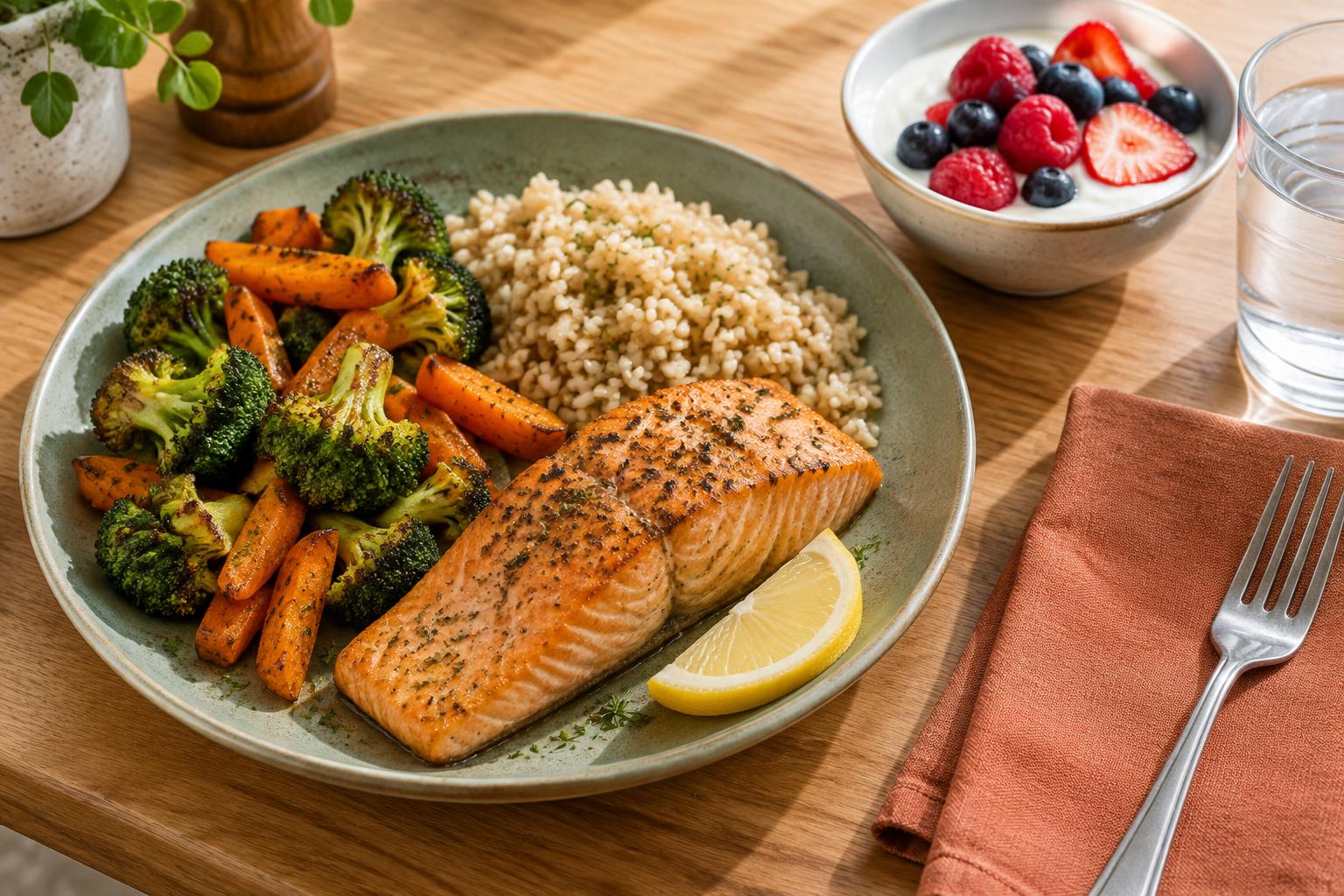
- Dinner: Thoroughly cooked salmon or tofu, roasted vegetables, and potatoes.
- Evening snack, if hungry: Whole-grain toast, a banana, or another food you tolerate comfortably.
This is an example, not a prescribed diet. Portions should reflect your hunger and needs. If nausea, reflux, diabetes, food allergies, or another medical condition affects what you can eat, ask your care team for tailored advice.
4. Hydration: keep it simple
Water is a good everyday choice. You can also get fluids from milk, soups, and water-rich foods.
Keep a drink nearby, especially if you are active or the weather is warm. If plain water is unappealing, try chilled water, a slice of lemon, or another pregnancy-safe option you enjoy.
Your fluid needs vary with activity, temperature, health, and other factors. Follow any fluid restrictions or special instructions from your clinician.
If you cannot keep liquids down, have very dark or infrequent urine, feel faint, or are concerned about dehydration, contact your healthcare provider promptly.
5. Foods and drinks to avoid or limit
Food safety is especially important during pregnancy because some infections can cause serious complications.
Avoid alcohol
The safest recommendation is not to drink alcohol during pregnancy. If you've already had a drink before realizing you were pregnant, don't panic; discuss any concerns with your prenatal care provider.
Limit caffeine
ACOG advises keeping caffeine intake below 200 milligrams per day during pregnancy. Coffee, tea, cola, chocolate, energy drinks, and some supplements all contribute. The amount in coffee varies widely by serving size and preparation.
Choose safer foods
Follow these practical precautions: Read the practical pregnancy food-safety guide.
- Avoid raw or undercooked meat, poultry, seafood, and eggs.
- Avoid unpasteurized milk and foods made from it.
- Wash fruit and vegetables thoroughly.
- Keep chilled ready-to-eat foods refrigerated and follow use-by dates.
- Avoid high-mercury fish and choose safer alternatives.
- Follow local food-safety guidance for deli meats, smoked seafood, and soft cheeses.
The CDC provides detailed guidance on safer food choices during pregnancy, including preparation temperatures and lower-risk seafood alternatives.
6. Make nutrition easier on busy or difficult days
Healthy eating doesn't need to involve complicated recipes or expensive ingredients.
- Keep convenient foods such as oats, canned beans, frozen vegetables, and whole-grain bread available.
- Prepare extra portions when you cook, then refrigerate or freeze them safely.
- Pair foods you enjoy with a source of protein or fiber when practical.
- Eat smaller meals if large meals worsen nausea or heartburn.
- Accept help with grocery shopping or meal preparation when available.
If you're struggling with food aversions, don't feel you have to force yourself to eat an idealized menu. Focus on what you can tolerate and discuss persistent difficulties with your care team.
7. When should you ask for extra nutrition support?
Seek individualized guidance if you have persistent vomiting, unintended weight loss, anemia, gestational diabetes, food insecurity, a history of an eating disorder, a restrictive diet, or a medical condition that affects nutrition.
A registered dietitian with pregnancy experience can help create a plan that meets your needs without unnecessary restrictions.
A gentle reminder
The second trimester is not a test of how perfectly you eat. Consistent, varied meals and appropriate prenatal care matter more than chasing a flawless menu.
Choose foods you enjoy, use reputable guidance for safety, and ask questions when you're unsure.
Medical note: This article is for general education and does not replace advice from your prenatal healthcare team. Supplement needs, dietary restrictions, and calorie requirements vary from person to person.
Sources and further reading
- CDC: Safer Food Choices for Pregnant Women
- CDC: Folic Acid — Sources and Recommended Intake
- NHS: Healthy Eating in Pregnancy
- NHS: Foods to Avoid in Pregnancy
Next in pregnancy nutrition and food safety
Pregnancy Food SafetyPractical precautions for shopping, cooking, and leftovers. · 3 min read